

Real patients reflect on what they wish they had known sooner on their MAC journey. See how their insights may help you on yours.
MAC=Mycobacterium avium complex.
Select a patient story below



Watch Julie’s story about partnering with her doctor and scroll to read more from her journal
This is Julie’s journey. Your experience may be different. Talk to your doctor if you have any questions or experience any side effects.

Welcome to Looking back on MAC, where you'll hear from real people who are ready to share what they wish they had known sooner on their MAC journey.
So watch as they share their journals and reveal what they've learned as they look back—to help give you inspiration as you look forward.
Hi, I'm Julie. I'd like to share what I wish I had known sooner on my MAC journey, so I'm going to read from a journal that looks back on my time with MAC lung disease. The first time I tested positive for MAC was many years ago. Back then, most doctors didn't have as many resources about MAC lung disease available to share. So my doctor started me on multidrug treatment, but neither of us really knew what to expect. It was a really long journey, and sometimes I felt like I was traveling it on my own. It wasn't until 3 years later that I finally tested MAC-negative. Unfortunately, that didn't last long. A year and a half after getting MAC-negative, I tested positive for MAC again. But by this time, doctors knew more about MAC. I started seeing a new infectious disease doctor who was more familiar with treating it. At my first visit, she asked me how I spent my days, then coordinated my appointments and my monthly sputum checks so that I could keep doing the things I loved. That's when I realized how much of a difference a strong doctor-patient partnership could make. I've always been the kind of person who tries to give it her all, whether it's cooking my favorite dish, cheering on my alma mater, or mastering mahjong. So I was excited to see that my new doctor approached my treatment the same way. She helped me understand what to expect with multidrug treatment and why I needed ongoing monitoring while I was on treatment. It was a relief to have a doctor who saw me as a whole person. She wanted me to test MAC-negative as much as I did. That's when I knew my experience would be much different this time. When I continued to test positive for MAC after more than 6 months of multidrug treatment alone, my doctor could tell I was discouraged. Although I understood the plan was for me to add ARIKAYCE to my multidrug treatment, I had a lot of questions about this treatment, and any potential side effects that I may experience. She patiently answered all my questions, and when I left her office, I said to myself, "I can do this." When I got my first MAC-negative test, I think my doctor was as happy as I was. After all, we did it together. Even now, my doctor remains highly engaged, and caring, and supportive as I continue the plan we have made together: staying on ARIKAYCE with multidrug treatment for 1 more year after my first MAC-negative result, and continuing monitoring and sputum checks. She also shares any new information she has about MAC and makes sure to keep me up to date. Looking back now, I realize it has made all the difference in the world to have a doctor who supports me every step of the way.MAC lung disease can be challenging, but I learned that having a great partnership with my doctor can help me face the challenge. This was Julie's experience. See what other people with MAC wish they had known sooner on their journey, so that their insights may help you on yours.



Individual results may vary.
Julie was compensated for her time.


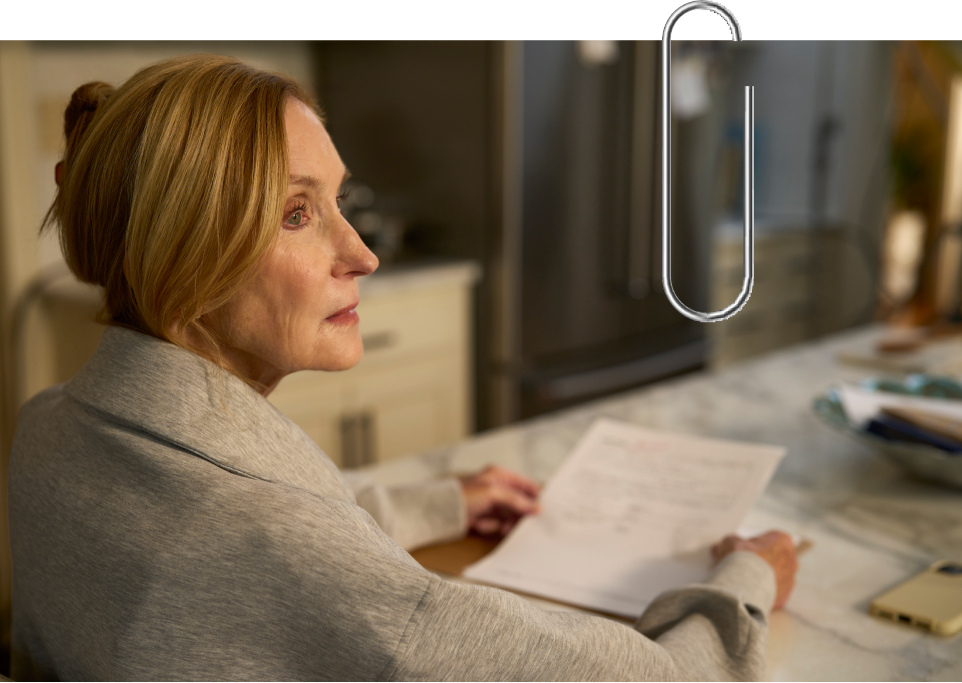
The first time I tested positive for MAC was many years ago, when there were not as many resources for MAC lung disease available.
My doctor started me on multidrug treatment, but I did not really know what to expect.

It wasn't until 3 years later that I finally tested MAC-negative. Unfortunately, that didn't last. A year and a half later, I tested positive for MAC again. But by this time, more was known about MAC and I started seeing a new infectious disease doctor who was very familiar with treating it.
At my first visit, she asked me how I spent my days, then coordinated my appointments and monthly sputum checks so that I could keep doing the things I loved.
It wasn't until 3 years later that I finally tested MAC-negative. Unfortunately, that didn't last. A year and a half later, I tested positive for MAC again. But by this time, more was known about MAC and I started seeing a new infectious disease doctor who was very familiar with treating it.
At my first visit, she asked me how I spent my days, then coordinated my appointments and monthly sputum checks so that I could keep doing the things I loved.


I've always been the kind of person who tries to give it her all, whether it's cooking up my favorite dish, cheering on my alma mater, or mastering mahjong. So I was excited to see that my doctor approached my treatment the same way.
She took her time, explaining MAC and my treatment plan to me in a way that I understood. She helped me understand what to expect with multidrug treatment and why I needed ongoing monitoring while I was on treatment.

We also discussed what the plan would be if I was still testing positive for MAC after at least 6 months of multidrug treatment. I'm so glad we mapped out a schedule and a plan together right from the beginning.
She showed me how I could access my sputum test reports online and encouraged me to reach out to her with any additional questions. It was a relief to have a doctor who saw me as a whole person. She wanted me to test MAC-negative as much as I did.

She patiently answered all my questions, and when I continued to test positive for MAC after more than 6 months on multidrug treatment alone, my doctor could tell I was discouraged. Although I understood the plan was for me to add ARIKAYCE to my multidrug treatment, I had a lot of questions about taking this treatment, and any potential side effects I may experience.
When I left her office, we had a plan. I felt like she really wanted me to be successful. I said to myself, "I can do this."
ARIKAYCE is used to treat a limited group of adults with difficult-to-treat MAC lung disease in combination with multidrug therapy.
For more information about possible ARIKAYCE side effects, click here. If you have questions about side effects, be sure to speak with your doctor.

When I got my first MAC-negative test, I couldn't believe it. I think my doctor was just as excited and happy about it as I was! After all, we did it together.

In a clinical study, adding ARIKAYCE to a multidrug treatment helped 29% (65/224) of people with difficult-to-treat MAC lung disease test MAC-negative at 6 months compared to 8.9% (10/112) of people on a multidrug treatment alone. After 6 months, people on ARIKAYCE did not see an improvement in their 6-minute walk test and St George's Respiratory Questionnaire measurements.
Even now, my doctor remains highly engaged, caring, and supportive as I continue the plan we have made together:
- Staying on ARIKAYCE and multidrug treatment for 1 more year after my first MAC-negative result (to help make sure the MAC bacteria are cleared from my lungs)
- Continuing monitoring and sputum checks
disease to keep me up to date.
information she learns
about MAC lung disease to
keep me up to date.
Looking back now, I realize it has made all the difference in the world to have a doctor who supports me every step of the way.
-Julie, a real patient